
Best Employee Onboarding Companies (2026)
The leading employee onboarding companies range from process platforms to LMS-driven and HR-integrated onboarding. This guide compares the top providers by what each is best for, then covers immersive VR for the role readiness that hands-on jobs demand on day one.
QUICK ANSWER
The best employee onboarding companies in 2026 are Trainual for process and SOP-based onboarding, WorkRamp and 360Learning for onboarding tied to skills and enablement, Enboarder for experience-driven journeys, and BambooHR for onboarding inside an HR system. These handle workflow, content, and records. For roles where new hires must perform a physical or high-stakes task on day one, immersive VR (such as custom programs from The Prime VR) adds hands-on role readiness that shortens time-to-competence.
The companies, and what each is best for
Trainual
Best for: Process and SOP-based onboarding
A popular platform for documenting processes and onboarding new hires into roles, strong for franchises and growing teams that need repeatable SOPs.
WorkRamp
Best for: Onboarding tied to skills and enablement
A learning platform that connects onboarding to ongoing enablement and role-based skill development.
360Learning
Best for: Collaborative onboarding at scale
A collaborative learning platform where onboarding content is built and improved with subject-matter experts across the organization.
Enboarder
Best for: Experience-driven onboarding journeys
Focused on the new-hire experience with guided, human-centric onboarding journeys and manager nudges.
BambooHR
Best for: Onboarding inside an HR system
Combines onboarding workflows with core HR, a fit for SMBs that want hiring, onboarding, and records in one place.
SPECIAL MENTION: IMMERSIVE TECHNOLOGY
The Prime VR, for hands-on onboarding
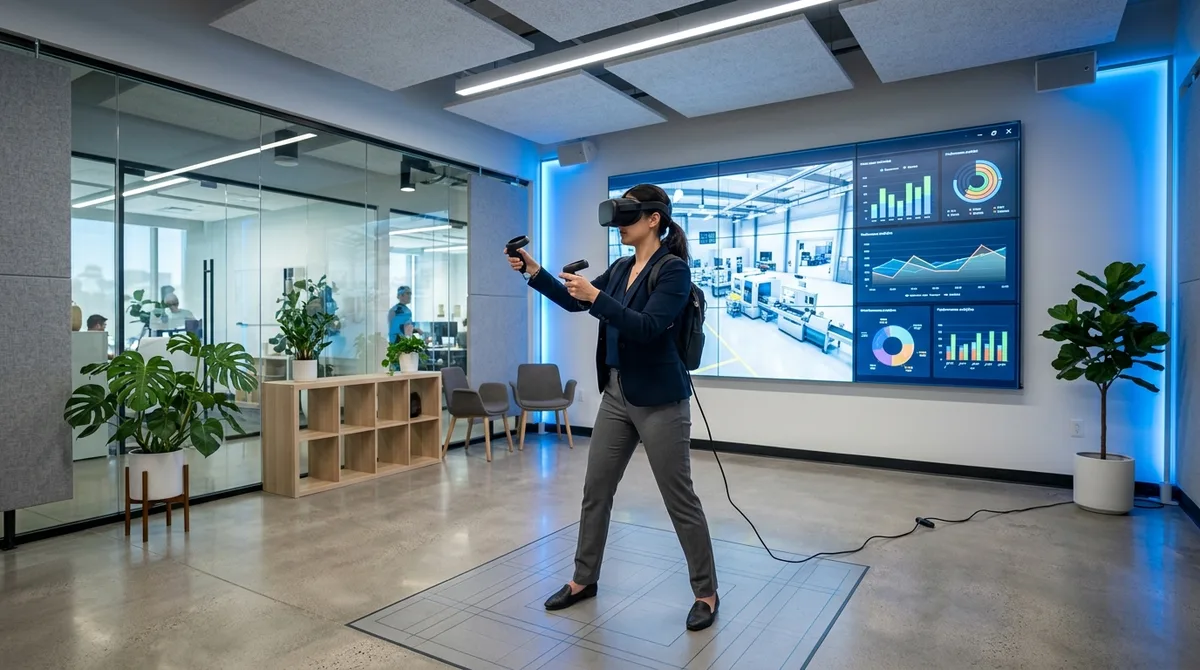
The platforms above handle process, content, and records. The Prime VR represents the immersive frontier for role readiness: custom VR onboarding where new hires practice the actual job, equipment operation, safety procedures, manufacturing tasks, customer or sales interactions, before doing it for real, with measured feedback. For multi-site and franchise operations it standardizes day-one capability across every location.
Explore enterprise VR training and franchise VR training.
Content and Experience
Good onboarding blends compliance, culture and role skills. Avoid information dumps.
Sequence content over weeks.
Manager and Buddy Support
Managers and buddies make new hires feel welcome and guide learning. Provide them with tools.
Check in regularly.
Data and Improvement
Track completion, satisfaction and time to productivity. Adjust programs.
Ask new hires for feedback.
Questions to Ask Providers
Ask about integrations, personalization and reporting. Request a demo.
Talk to references.
Beyond Software
Tools support onboarding but managers and peers create belonging. Plan human touches.
Check in often.
What Buyers Are Actually Buying
The onboarding category covers several different things, including software that automates paperwork and task flow, program design services, content development and outsourced administration.
Buyers frequently compare providers across those categories without noticing that they solve different problems, which is why evaluations stall.
The first useful step is deciding whether the gap is administrative, experiential or content related, since that determines which category is relevant at all.
Administrative Onboarding
Administrative systems handle offer acceptance, documentation, eligibility verification, equipment and access provisioning and the task flow between departments.
The value here is measured in reduced time and fewer errors, and the failure mode is a system that automates a broken process rather than fixing it.
Integration with payroll, identity and access systems determines whether the automation actually removes work or merely relocates it.
Program Design and Content
Design services address what a new hire experiences over the first weeks, including sequencing, manager involvement, role clarity and early milestones.
Content development builds the role specific material that generic libraries cannot supply, and the quality depends heavily on access to internal subject expertise.
Content that nobody owns after delivery ages quickly, and maintenance responsibility should be settled during the evaluation rather than after.
Manager Enablement
The hiring manager is the strongest influence on a new hire experience, and programs that do not equip managers rely on individual variation.
Structured manager checklists, defined early conversations and clear thirty and ninety day expectations are what make the experience consistent across teams.
Providers should be asked explicitly what the manager is expected to do, because the answer reveals how much internal effort the program actually requires.
Measurement
Onboarding should be evaluated on time to productivity, early attrition, manager assessment of readiness and new hire feedback collected at intervals rather than only at the end.
Baselines before implementation are required for those measures to support any claim, and in this category the data usually already exists in human resources systems.
Attrition within the first ninety days is the measure most directly connected to onboarding quality and the one most worth tracking deliberately.
Questions Worth Asking
Useful questions include which category the provider actually serves, what the buyer must supply, what integration is assumed, who maintains content and how outcomes will be evidenced.
Simulation and structured practice complement onboarding by letting new hires rehearse the work before performing it.
Employment law, eligibility verification, data protection and record keeping obligations govern onboarding, and applicable requirements should be confirmed with qualified advisors.
Common Mistakes and How to Avoid Them
Common errors include comparing providers across different categories, automating a process that should be redesigned first, leaving content ownership undefined, ignoring manager enablement and implementing without a baseline.
Supervisors can help by making it acceptable to pause and ask. A culture where questions are treated as competence rather than weakness produces fewer errors in employee onboarding.
How Employers Evaluate Readiness
Organizations assess programs on time to productivity, attrition within the first ninety days, manager readiness assessments, new hire feedback at defined intervals and administrative error and cycle time.
Keeping Skills Current
Roles, systems, regulations and organizational structure change. Reviewing whether onboarding content and task flows still match the current organization prevents delivering an introduction to a company that has moved on.
Planning and Preparation
Preparation includes diagnosing whether the gap is administrative, experiential or content related, baselining time to productivity and early attrition, mapping the current process end to end and confirming integration and record keeping requirements.
Documentation That Holds Up
Baseline and post implementation measures, completion records for required onboarding items, eligibility and documentation records held as regulation requires and content version history are what demonstrate both compliance and improvement.
Frequently Asked Questions
What is the best employee onboarding company?+
It depends on need. Trainual leads for process and SOP-based onboarding, WorkRamp and 360Learning for onboarding tied to skills and enablement, Enboarder for experience-driven journeys, and BambooHR for onboarding inside an HR system. These handle workflow, content, and records. For roles where new hires must actually perform a physical or high-stakes task on day one, immersive VR adds hands-on role readiness, covered below.
How long should employee onboarding take?+
Administrative onboarding can take days, but role readiness, the point where a new hire can safely and competently do the job, takes longer and is where most programs fall short. Platforms handle paperwork, process, and content efficiently. The gap is practiced capability for hands-on or high-risk roles, which is why simulation-based practice matters for those positions.
Where does VR fit in onboarding?+
VR fits the role-readiness slice of onboarding for hands-on or high-stakes positions: equipment operation, safety procedures, manufacturing tasks, and customer or sales interactions. New hires practice the actual job in a realistic simulation before doing it for real, which shortens time-to-competence and reduces early-tenure errors. It complements your onboarding platform rather than replacing it.
What is time to productivity?+
The time it takes a new hire to perform at expected levels.
Why involve managers in onboarding?+
They set expectations and support learning in daily work.
Make new hires job-ready on day one
We build custom VR onboarding for hands-on and high-stakes roles, standardized across every site. Tell us the role and we will scope it.